The Russian website African Initiative regularly reports on events related to the development of the Orthodox religion on the continent. In Uganda, seminary students celebrate their respective weddings in the great Orthodox tradition; in Mauritius, six inhabitants are baptized by a dignitary of this Church; in Mali, schoolchildren discover the tradition of Theophany by watching videos in which believers immerse themselves in icy water at –40°C. Far from being anecdotal, these examples, among many others, testify both to the importance Moscow attaches to Africa and to the implementation of a genuine strategy of influence that is part of a long-term approach. Alongside other instruments, China is pursuing a similar strategy, while the United States is disengaging…
From the Ukrainian conflict to Africa
For a long time, the presence of the Orthodox Church on the African continent remained marginal. It was based on two ancient centers: Egypt on the one hand, and Ethiopia, Christianized as early as the 4th century and rooted in an ancient Eastern Orthodox tradition, on the other. Outside these areas, Greek diasporas settled in Africa had developed a few churches here and there. The entire continent was placed under the authority of the Patriarchate of Alexandria.
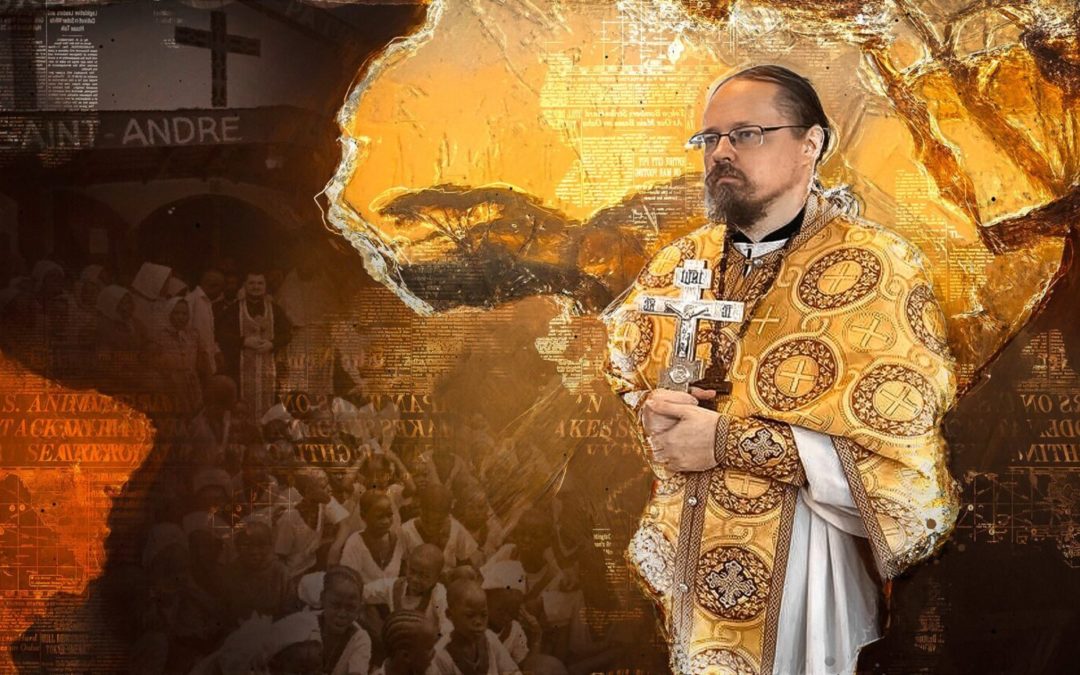
But in January 2019, in the context of the Ukrainian conflict, which began well before the Russian invasion of 2022, the Orthodox world split. The Patriarchate of Constantinople recognized the Church of Ukraine as independent from Moscow. Shortly thereafter, in November 2019, the Patriarchate of Alexandria followed suit. For Russia, this situation was unacceptable. The schism was consummated. It was in this context that, in December 2021, the Russian Orthodox Church announced the creation of the Patriarchal Exarchate of Africa, a continental structure placed directly under its authority. This decision marked a turning point. According to figures put forward by the Patriarchate of Moscow in February 2025, this religious institution already counted 350 parishes spread across 32 African countries, with a very strong presence in Kenya. By creating the African Exarchate, the Kremlin— which uses the Church as a tool of the state, even if this point does not enjoy consensus within the clergy— played on two fronts: marginalizing the Patriarchate of Alexandria and equipping itself with an additional instrument of influence. The continent thus becomes a new field for the recomposition of the Orthodox world, where religious and geopolitical issues intertwine.
A continent of religious tolerance
Russia’s ability to mobilize the religious register fits into a particular context: that of sub-Saharan Africa, marked by strong tolerance toward all faiths. In most societies, affiliations are neither rigid nor exclusive. Mixed marriages between Muslims and Christians are common and socially accepted; conversions are frequent and accepted. Former president Laurent Gbagbo is an example of this. Baptized and a pupil at a minor seminary, he later became evangelical, and after his return from prison in The Hague, he rejoined his former church during a large ceremony at Saint Paul’s Cathedral in Abidjan. Funerals and certain commemorations give rise to ecumenical ceremonies. In this universe, only being atheist is considered blasphemous. “Neither God nor master” is tolerated but perfectly misunderstood. Russian Orthodox Christianity fits into this environment as an additional religious offering, not as a rupture.
The war of values
Africa has already experienced several waves of religious immigration. In the 19th and 20th centuries, Catholic and Protestant missions arrived in the wake of colonizers. From the late 1980s onward, American evangelical churches experienced spectacular growth; they were part of the spread of economic liberalism, with a strong messianic tropism. While the genuine theological dimension should not be overlooked, today Moscow mobilizes religion within the framework of a broader ideological confrontation.
In his speeches, Vladimir Putin often denounces the “amoral” West, which he contrasts with “Russian spirituality and morality.” He elevates Russia to the rank of a “beacon of traditional values.” These statements find a particular resonance in Africa and, more broadly, in many countries of the Global South, which are impervious to gender theories and wokism tirelessly promoted by American and European leaders over the past twenty years. This disconnect has largely contributed to Western disengagement from the continent.
But behind the spiritual discourse, another war is being waged: that of market values, tangible and hard cash. A battle of influence for access to opportunities. Irina Abramova, director of the Institute of Africa of the Academy of Sciences, makes no secret of it. In a long interview, she details the continent’s assets and the reasons why Russia is establishing itself there: “Africa is destined to become one of the central spaces of tomorrow’s world.” In addition to impressive rates of economic growth, she emphasizes the importance of demography on the continent: “nearly 800 million Africans are under the age of 25, a youth that represents both energy, productive capacity, and consumption potential.” It is necessary, she says, to “lay down markers.” Lucidly, she adds: “Failing to establish itself there sustainably, Russia, a country of 150 million inhabitants confronted with an unfavorable demographic dynamic, would risk finding itself isolated, while the continent offering the economic and human opportunities of tomorrow would be taken over by other actors.” In this interview, Irina Abramova also praises African culture. “There is this combination of values: kindness, a short memory for hatred. They are benevolent, like the Russians, moreover. We are alike.” The establishment of Orthodox churches fits into this long-term perspective, into the ties woven between societies. Since its return to the continent ten years ago, when it arrived without a geographic or sectoral strategy, Russia has since equipped itself with several levers: economic, security, cultural, and now religious.
Beijing, Washington, and the others…
Russia is not the only actor investing across the board in Africa. China preceded it: since the early 2000s, Beijing has established more than sixty Confucius Institutes on the continent. Here, it is not a matter of religion, but of learning Mandarin, cultural dissemination, and elite training, with a strong presence within African universities. A field of influence that continues to expand.
At the same time, Washington is gradually disengaging from all the traditional instruments of its soft power in Africa: reduction of aid and development programs, weakening of USAID, refocusing of diplomatic and cultural actions, and a reduced presence in key sectors such as health, education, or the media. This withdrawal is also reflected in recent U.S. strategic documents. In the new National Security Strategy (NSS), Africa is mentioned only incidentally at the end of the text. The National Defense Authorization Act (NDA), published on January 23, yet central to American budgetary and capability priorities, contains no reference to the continent.
This strategic silence confirms Washington’s refocusing on Asia, deemed a priority. Moreover, the American administration is no longer even trying to contain its adversaries in Africa; it knows that this battle is already lost. Russia dominates the narrative. In an opinion poll conducted between 2023 and 2024, Vladimir Putin topped the list of leaders inspiring the most trust. The economic war with Beijing has also been decided for a long time. Trade exchanges between the United States and Africa today represent less than a quarter of those between the continent and China. Washington is also aware that despite their geographic and historical positions, its European allies are too weakened to be able to play the role of containment against its competitors, as they had done with communism during the Cold War. Another era, when African elites nurtured by the USSR benefited from training provided, among others, at the Patrice Lumumba University in Moscow: that of a hard-line materialism that fought the opium of the people. From Marxism to the great return of spirituality…
Leslie Varenne