After three years of unspeakable suffering for the population, after Zamzam, after El-Fasher—names that will remain in Sudanese history as disasters the world saw coming yet failed to prevent—the city of El-Obeid is now threatened with the same fate. The same actors are at work: General Hemedti’s Rapid Support Forces (RSF). The same institutions—the United Nations, the Security Council, NGOs—issue the same warnings, which fall on deaf ears. The perpetrators of the war have nothing to fear, while Western diplomacies content themselves with placing the belligerents on an equal footing. This “negative neutrality,” to use the expression of Sudan’s representative to the United Nations, allows warnings to multiply, reports to accumulate, and tragedies to run their course.
If a doctoral student wished to devote a dissertation to the two defining features of Western diplomacy in the early twenty-first century—cynicism and incompetence—he would find in the Sudanese case a remarkable case study. The two, moreover, go hand in hand: each concealing the other, and vice versa.
Master Strategist
In March 2023, one month before the outbreak of war in Sudan, the United Nations Special Representative, Volker Perthes, assured the Security Council that “the return to peace is near.” One month later, backed by the United Arab Emirates, which seeks to expand its influence across the Red Sea and the Horn of Africa, Mohamed Hamdan Dagalo, known as Hemedti, leader of the RSF, turned against his former ally, General al-Burhan, commander of the Sudanese army, plunging the country into a devastating war. Before the conflict and ever since it began, Western diplomacy has alternated between misjudgment, inaction, incomprehensible decisions, duplicity, and willful blindness.
From Zamzam to El-Fasher
The Zamzam displacement camp was established in 2004 during the first Darfur war. From 2023 onward, the camp received increasing numbers of refugees fleeing atrocities. Up to 500,000 people lived there under increasingly precarious conditions. For months, humanitarian organizations warned of the deteriorating situation. Then the RSF began blocking the few aid convoys that managed to get through, worsening shortages. In April 2025, they attacked and bombed the camp. The survivors then took to the road in search of safety. Around 150,000 people managed to reach El-Fasher, the last major city in North Darfur still under Sudanese army control, but already under siege.
For eighteen months, humanitarian organizations warned of the risk of famine, attacks against civilians, and violence in the displacement camps surrounding the capital of North Darfur. For eighteen months, diplomats multiplied their statements. For eighteen months, the United Nations warned of an impending catastrophe. Then El-Fasher fell.
A few months later, Mohamed Chande Othman, chairman of the Independent International Fact-Finding Mission mandated by the United Nations, concluded: “The crimes committed in and around El-Fasher were not random excesses of war. They were part of a planned and organized operation bearing the hallmarks of genocide.” Too late.
El-Obeid: Same Cast, Same Story…
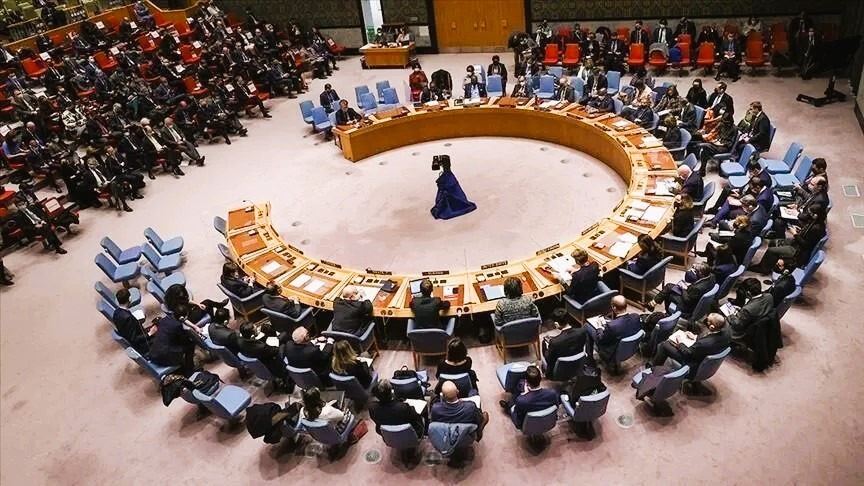
Today, in El-Obeid, the same scenario is unfolding. In this city, the capital of North Kordofan, more than 500,000 civilians are trapped by an RSF offensive. On June 18, United Nations High Commissioner for Human Rights Volker Türk warned that an attack on El-Obeid could lead to “further serious international crimes.” On June 20, the Security Council met to discuss the issue and spoke of an “imminent risk of mass atrocities.” It called on the RSF to end attacks against civilians and critical infrastructure. Yet the RSF have not altered their strategy by a single iota. According to the independent outlet Ayin Sudan, their approach is methodical: “The drones first targeted fuel stations, then electricity generators, making life unbearable for civilians and thereby forcing them to leave the city.” The trap then closed around half a million people, between 100,000 and 200,000 of whom are internally displaced persons who had already fled violence elsewhere in the country.
The American double game
On June 22, the U.S. State Department issued a moving statement declaring itself “deeply concerned” by the deployment of RSF forces around El-Obeid and referring to “alarming indications” that “mass atrocities may be imminent.” At the same time, on June 26, Treasury Secretary Scott Bessent imposed sanctions on several companies owned by, or directly controlled by, the Sudanese Armed Forces (SAF). How is the army supposed to defend El-Obeid and the rest of the country if it can no longer purchase weapons? Moreover, this effectively benefits the RSF, whose military supplies from the UAE remain untouched by sanctions, at a moment when defections are increasing within their ranks and the balance of power is shifting in favor of the SAF.
These two decisions, taken forty-eight hours apart, perfectly summarize American policy toward Sudan. To avoid being caught red-handed and for the sake of appearances, the Treasury also sanctioned a network involved in recruiting Colombian mercenaries linked to the RSF. But nobody is fooled. The network will simply reconstitute itself under different names, especially since these measures target no entity linked to the United Arab Emirates, such as Global Security Services Group, which, according to some sources, is the real employer of these men.
The British Discomfort
Washington is not the only Western capital practicing willful blindness. If American officials take great care to avoid naming and sanctioning the United Arab Emirates, their British counterparts are equally skilled in the matter. Nathaniel Raymond, director of Yale’s Humanitarian Research Lab, claims to have warned the Foreign Office for months about the dangers facing El-Fasher, as well as the external support benefiting the RSF. According to his testimony before a British parliamentary committee, the information provided to the authorities made it possible to grasp the full extent of the threat. After the fall of the city, Raymond recounts that a British official asked him whether his estimate of at least 60,000 deaths might not be too high. “I came to believe that this estimate had become a political problem for the Foreign Office,” he declared.
More seriously still, the researcher accuses London of having prioritized its “economic, security and diplomatic” relations with the United Arab Emirates over the prevention of the massacre. These accusations have been rejected by the British government. Yet the testimony caused such discomfort at Westminster that the chair of the parliamentary committee described it as “deeply shocking.” She called for an inquiry to determine whether warnings concerning the genocidal risk in El-Fasher had been ignored.
Europeans True to Themselves
At a summit on Sudan in Berlin in April 2026, Jean-Noël Barrot delivered a lofty statement…“Let us not forget Sudan because, at its core, a part of our common humanity is at stake there.” Beautiful words. Then, in the very next breath, the French Foreign Minister, like his American counterparts, placed both sides on an equal footing: “We call on the belligerents to respect an immediate humanitarian truce and to lay down their arms.” A sort of great diplomatic whitewashing in which a state, a regular army, and a militia accused of crimes against humanity are all tossed into the same drum.
On June 24, France, Germany, Ireland, Italy, the Netherlands, Norway, and the United Kingdom issued a joint statement on El-Obeid. The text repeats the same familiar refrains: “concern,” “the El-Fasher precedent,” “hallmarks of genocide,” “calls on the RSF to cease its offensives.” Then comes the next step: “The RSF, the Sudanese Armed Forces and their allies” are collectively urged to de-escalate tensions.
Khartoum calls this “negative neutrality.” A neutrality that never weighs equally on those who fight, those who besiege, and those who finance. Conveniently, it allows governments to deplore massacres without upsetting their own partners.
The Sudanese people, in El-Obeid and elsewhere, must not only fear the RSF. They must also fear official communique
Leslie Varenne