Failed Coup, Benin Reconnects With Its Past
On 7 December 2025, Benin was shaken by a coup attempt that was ultimately foiled thanks to the intervention of Nigeria and France, which on this occasion assumed once again the role of “Africa’s policeman.” The consequences of these events remain difficult to assess; nevertheless, they mark a historic and symbolic rupture in the history of a country that had not experienced a coup d’État since 1972. This sudden step backward shows that President Patrice Talon’s economic achievements are not enough to guarantee stability when they are accompanied by a clear democratic decline.
Three days after the coup, the sequence of events on 7 December, a day that held all of West Africa in suspense, can be reconstructed with reasonable precision. The facts are known and cross‑checked. However, one area of uncertainty remains: was it a carefully planned coup or a mutiny that spiraled out of control? Many elements point to the latter. Usually, coups take place at dawn; in this case, the soldiers went manu militari to the homes of the country’s two most important generals at two o’clock in the morning: General Bada, director of the president’s military cabinet, and the Chief of Staff, Abu Issa. After taking them hostage, they headed toward the residence of Patrice Talon, where they clashed fiercely with the Republican Guard, which managed to block their advance. They then seized the national television station. After reading the traditional announcement dissolving the institutions and removing the head of state, they also expressed their professional grievances: “The situation in northern Benin is catastrophic. Our brothers‑in‑arms fall daily in battle against terrorist groups, without adequate ammunition, without modern equipment, without logistical support. The promised risk bonuses are illusory, the wounded abandoned to their fate, the families of the martyrs left in misery. How can we tolerate that our soldiers, the shield of the nation, are treated as cannon fodder? Militarily: promotions and advancements have become a rigged system, reserved for a servile elite close to power, to the detriment of the deserving who bleed on the field.”
Contrary to the talking points circulated throughout Sunday, this was not a small isolated group led by an eccentric officer. Pascal Tigri, the leader, is a lieutenant colonel and head of the Special Forces Group, whose men are frequently deployed in the north to confront jihadist groups. He is therefore an officer deemed competent enough to command an elite unit. Moreover, a small group would never have been able to simultaneously seize the national television station, fight the presidential guard, and deploy near the port and in several districts. In a statement recounting the events, the Beninese government reported that it was the soldiers from the Togbin military base—one of the country’s eight operational bases—who rose up. So, coup or mutiny? The question remains, but it should have determined the nature of the response.
In regional capitals—Abidjan, Accra, Freetown, and Abuja—as well as in Paris, the events of Sunday took everyone by surprise. There was urgency. Patrice Talon had to be saved, and at any cost prevented from becoming the sixth West African president overthrown in the last five years. All the more so because he is an ally of France and the aforementioned countries. Moreover, Benin hosts the last remaining French soldiers in the region, who assist the national army in its fight against jihadist groups.
Saving Soldier Talon
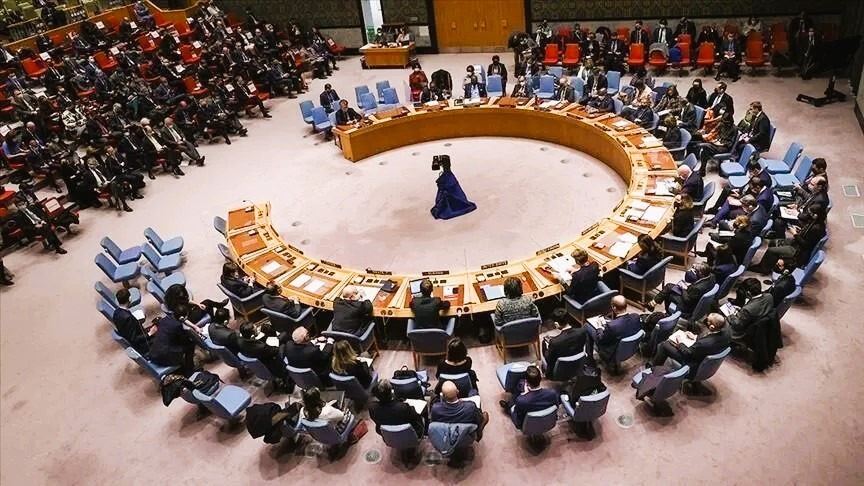
The subregional organization, ECOWAS, also reacted with unprecedented speed. By midmorning, it announced that it would deploy its standby force to restore constitutional order. Above all, this move served to legitimize the Nigerian military action being prepared. Officially, Bola Tinubu acted at Cotonou’s request. The Nigerian president also responded to requests from Emmanuel Macron, who assumed a role of “coordination” and “information sharing” with the countries of the region. At 4 p.m., Nigerian aircraft struck the Togbin military base and the national television station. Some mutineers were arrested, others surrendered, still others—such as Pascal Tigri—managed to escape. A few hours later, 300 soldiers from Abuja and Abidjan arrived in Cotonou and took up position at the Togbin base. At 8 p.m., Patrice Talon appeared on television. The coup had failed. Everything was under control. All’s well that ends well?
Consequences and Inconsistency
The story is far from over. By publicly claiming his assistance and his role in keeping Patrice Talon in power, Emmanuel Macron reconnects with a past many believed definitively buried since France’s failure in Niger in 2023. Still lacking a strategy and vision for the continent, he reacts according to circumstances and opportunities. What about the consequences? Social media is already in an uproar, denouncing the involvement of the former colonial power in an internal affair. Another major question: what will become of relations between Beninese and French soldiers after Paris requested strikes on their brothers‑in‑arms? On 8 November, the Beninese Communist Party published a statement condemning the Franco‑Nigerian intervention and calling for the immediate departure of foreign forces. A déjà vu atmosphere…
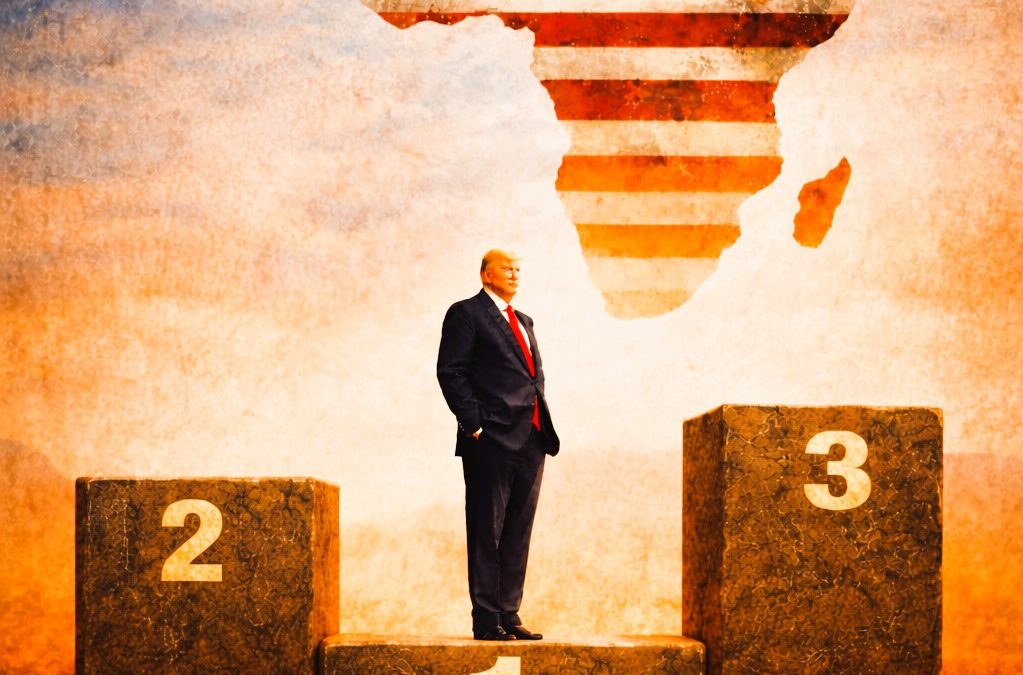
For now, Nigeria is satisfied: “Our forces have defended democracy, restored constitutional order, and protected the population.” The Senate approved, on Tuesday 9 December, Bola Tinubu’s request to deploy troops on a peacekeeping mission. But what use is a peacekeeping mission in a country where a coup attempt was swiftly thwarted, where everything has returned to order with a republican army loyal to its head of state? It is likely that it will not be long before Beninese citizens denounce this “occupation force.” Meanwhile, this sequence gives the Nigerian president some breathing room. Weakened domestically, he is under pressure from the Trump administration, which accuses him of passive complicity in deadly violence against Christians. Behind these pretexts lie political and economic stakes. Washington nevertheless continues to exert pressure, threatening Nigeria with military intervention. It is interesting to note that the State Department has been silent—no comment on the coup, nor on Bola Tinubu’s intervention. Incidentally, Emmanuel Macron as proposed military assistance to support Nigeria in its war against Boko Haram. What a mishmash! In the end, this coup serves the agendas of external actors.
The Beninese Paradox
Unsurprisingly, the biggest loser on 7 November is Benin. In a country where the security threat requires a united army, it is now more divided than ever between loyalists and mutineers. Obviously, apart from securing a head of state who no longer trusts his own defense forces, foreign armies will resolve nothing. The answer cannot be purely security‑based; the real solution is political.
Since coming to power in 2016, Patrice Talon has indeed transformed Benin and achieved undeniable economic successes. The country has experienced record growth reaching 7.5% in 2024. However, this number reflects only part of reality. The high cost of living, the lack of wealth redistribution, its concentration in the hands of an elite, and the capture of strategic sectors by companies close to power have fueled a sense of injustice.
Nevertheless, strengthened by his successes, the Beninese president has completely locked down the country’s democratic life. His opponents have had no choice but exile or prison. A few months before the April 2026 presidential election, the climate has further deteriorated. Several opposition candidates have been disqualified on questionable grounds. Thus, Romuald Wadagni, current Minister of the Economy and the outgoing president’s designated successor, will face no serious challenger. The election is already decided. In November 2025, a constitutional reform further restricted—if that is still possible—the political space. The creation of a Senate composed of former presidents and senior officials will allow Patrice Talon to maintain control over all major decisions. Once known for its peaceful political transitions, Benin is experiencing a democratic regression that generates political and social fragilities. A cauldron in which instability and coups are born—a trap into which Benin has fallen. To escape it, there is only one solution: carry out a true democratic reset, open the prisons, abandon the new constitution, allow all candidates to run in elections—the cards are in Patrice Talon’s hands.
Leslie Varenne